How to Catch Up on a UK Bookkeeping Backlog Before MTD
A practical UK guide to clearing a bookkeeping backlog before MTD pressure, deciding what is worth reconstructing, and getting current without pretending every old month deserves the same effort.
Quick answer
To clear a UK bookkeeping backlog before Making Tax Digital, use triage rather than perfectionism: start with the most recent month and work backwards, prioritise material accounts, and for backlogs beyond 12 to 18 months establish verified opening balances from the last filed accounts instead of reconstructing everything. A typical month of 100 to 200 transactions takes 2 to 4 hours manually, so a two-year backlog is 48 to 96 hours; tool-assisted coding such as CodeIQ compresses this to 30 to 60 minutes per month. MTD ITSA becomes mandatory from 6 April 2026 for gross income over £50,000.
- Work backwards from the most recent month; recent periods have fresher evidence and available bank feeds.
- A two-year backlog is 48 to 96 hours of manual work; automated coding cuts each month to 30 to 60 minutes.
- Beyond 12 to 18 months, agree verified opening balances rather than reconstructing every historical transaction.
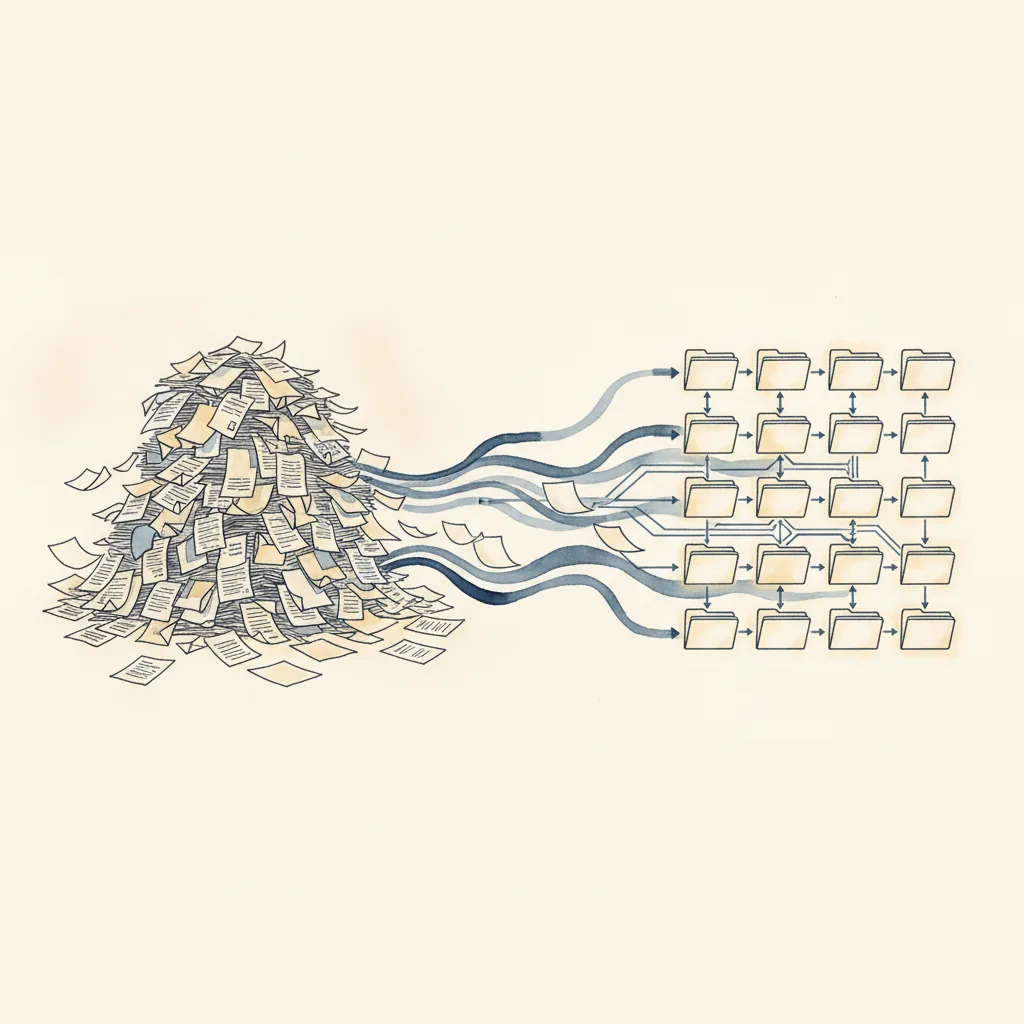
A bookkeeping backlog is not one problem. It is three problems piled on top of each other: unfinished processing, fading evidence, and rising compliance pressure. The longer it sits, the more time gets wasted treating ancient transactions as though they deserved the same attention as the latest VAT quarter or the next MTD submission.
The way out is not blind perfectionism. It is triage. Decide what matters for compliance, what matters for decision-making, what can be reconstructed efficiently, and what should be dealt with through sensible opening balances and documented adjustments instead of heroic forensic labour.
Why a Bookkeeping Backlog Accumulates (and Why It Matters Now)
A bookkeeping backlog rarely happens all at once. It accumulates through a familiar sequence, one that the ICAEW's practice management guidance flags as a persistent risk for smaller firms. A business grows faster than its bookkeeping capacity. A bookkeeper leaves. A sole trader prioritises client work over their own administration. The monthly routine slips to quarterly, then annual, then "when I absolutely must file."
For years, this was merely untidy. But since 6 April 2026, Making Tax Digital for Income Tax Self Assessment becomes mandatory for businesses earning over £50,000 in total gross income from self-employment or property. This replaces annual tax returns with digital recordkeeping and quarterly submissions. A backlog is no longer a tidiness problem. It becomes a compliance risk.
The January Deadline and What Follows
- The self-assessment filing deadline for the 2024-25 tax year is 31 January 2026. Miss it, and HMRC issues a fixed £100 penalty—even if no tax is owed.
- After three months, daily penalties of £10 apply, capped at £900. Further delays bring percentage-based penalties on the tax due.
- Interest on late payment now runs at 7.75% per annum—down from 8%, but still significant over time.
- Beyond penalties, an unreconciled history obscures your true financial position. You cannot make sound decisions from data that is months out of date.
How Long Does It Take to Catch Up on Bookkeeping?
Before we triage, we should be clear-eyed about the scale of the work. A typical month of bookkeeping for a small business -- 100 to 200 transactions -- takes an experienced bookkeeper 2 to 4 hours manually. That includes coding transactions, reconciling bank accounts, and handling VAT.
A two-year backlog, then, represents 48 to 96 hours of work. That is 6 to 12 working days. For a sole practitioner juggling client work, this is often untenable. For a practice with capacity, it is still a significant resource allocation. Industry observers note that bookkeeping and payroll together make up nearly 30% of the service mix in UK accountancy firms, and backlogs can consume disproportionate amounts of that time.
This is where we separate realistic planning from wishful thinking. You cannot clear a two-year backlog in a weekend. But you can compress the timeline significantly through triage and tooling.
Clearing a Bookkeeping Backlog: What to Tackle First
Not all months in a bookkeeping backlog carry equal weight. Recent periods are more likely to have supporting documents, accessible bank feeds, and fresh memory of what transactions represent. The further back you go, the colder the trail. A pragmatic approach to catching up on bookkeeping therefore works backwards from the present.
Practical Triage Order
1. Start with the Most Recent Period
Begin with the most recent unreconciled month and work backwards. Following the bank reconciliation process, this gets your current reporting closer to accurate faster, which is what matters for decision-making and compliance.
- Bank feeds are still available and fresh
- Supporting documents are easier to locate
- Transaction patterns are recognizable
- Errors compound less severely the closer you are to the present
2. Prioritize Material Accounts
Not all accounts carry equal risk. Focus on high-volume or high-risk accounts first.
- Primary operating bank accounts
- VAT control accounts (where misclassification has penalty implications)
- Accounts with known issues or suspected fraud risk
- Accounts required for imminent deadlines (VAT returns, year-end filings)
3. Establish Verified Starting Balances for Older Periods
If the backlog extends beyond 12 to 18 months, consider a pragmatic compromise. Rather than reconciling every historical month, agree on verified starting balances with the client—typically from the last filed accounts or tax return—and reconcile forward from there. This gets you current without reconstructing ancient history.
For Sole Traders: When to Just Draw a Line
For sole traders where the tax return is the binding document, sometimes a year-end adjustment journal and a clean start is more pragmatic than meticulous reconstruction. This is a conversation to have with the client and their accountant, but it is often the right call.
The "Good Enough" Threshold
Perfection is the enemy of done, particularly with historical data. A pragmatic approach focuses on materiality. Resolve significant discrepancies—anything that materially affects the accounts or tax position. For the rest, know when to stop.
Sometimes 95% accuracy across a three-year backlog is better than 100% accuracy on six months. The goal is not forensic precision on stale data. The goal is to get current, stay current, and manage risk appropriately.
Focus on Material Discrepancies
- Investigate and resolve any discrepancy over a set threshold (commonly £50 to £100, depending on business size)
- Write off immaterial historical differences with a year-end adjustment journal, properly documented
- Flag patterns of small errors (they may indicate systematic issues worth fixing going forward)
- Document your materiality threshold and rationale—auditors appreciate pragmatism backed by judgment
Always consult your accountant on appropriate thresholds for your business. Materiality is a professional judgment, not an arbitrary line.
Tool-Assisted Backlog Clearing: Compressing the Timeline
Manual ticking and tying is where the 2 to 4 hours per month comes from. When you need to catch up on bookkeeping quickly, modern automated coding tools can compress this to 30 to 60 minutes per month by handling the routine transactions -- direct debits, standing orders, recurring suppliers -- leaving the bookkeeper to focus on genuinely ambiguous items.
This is not marketing hyperbole. The compression comes from eliminating the repetitive pattern-matching that humans do slowly and computers do quickly. A tool that has learned your chart of accounts, VAT codes, and supplier patterns can classify 70 to 85% of transactions automatically with high confidence. The remaining 15 to 30% still require human judgment, but that is a manageable review task rather than a wholesale coding exercise.
Research from accounting practice management suggests that firms increasingly use offshore capacity or automation to clear backlogs, freeing senior staff for client-facing work and strategic advice. This is a pragmatic resource allocation, not an abdication of responsibility.
The IQ Suite's own bookkeeping software, IQ Books, is built for exactly this catch-up work. Its CodeIQ engine runs an eight-phase coding pipeline that can classify a whole month of bank transactions in around two minutes, so a two-year backlog becomes a review exercise rather than a coding one. Crucially, you rarely start from a blank ledger: if the client already has books in Xero, QuickBooks or Sage, the one-click migration brings the opening trial balance, contacts and outstanding invoices across, giving you the verified starting position this article keeps recommending. IQ Books is open to every account now — no invitation or pilot list — with a free tier covering one organisation on a bank-first feature set, paid plans from £5 a month, and extra client organisations at £2 each; every plan includes the whole platform, so the coding, reconciliation and VAT tools you need to clear a backlog are never gated behind an upgrade.
What Automation Actually Does
Pattern Recognition at Scale
Automated coding systems learn from historical data—both your own ledger and crowd-sourced patterns across thousands of businesses. When a transaction appears that matches a known pattern (description, amount range, merchant), the system applies the same coding with a confidence score.
VAT Classification
VAT is rule-based but context-dependent. A good system classifies transactions by type (standard-rated, zero-rated, exempt, reverse charge) and calculates net and VAT amounts automatically. This reduces errors and speeds up VAT return preparation.
Transfer and Duplicate Detection
Transfers between accounts and duplicate entries are common sources of reconciliation headaches. Automated systems flag equal-and-opposite amounts within a time window, preventing double-counting.
Invoice Matching
Where invoice data is available (from accounting platforms or OCR), systems can match payments to outstanding invoices, mark them as paid, and reconcile automatically. This is particularly valuable for businesses with high invoice volumes.
When to Draw the Line and Start Fresh
There are circumstances where reconstruction is genuinely not worth it. If records are incomplete, if bank feeds are no longer available, if the client cannot provide supporting documents, the cost of perfect historical accuracy may exceed its value.
For limited companies with statutory filing obligations, you need clean accounts. Companies House deadlines are fixed, and late filing attracts automatic penalties. But even here, you can establish verified opening balances from the last filed accounts and reconcile forward from a known-good position rather than attempting to reconstruct every transaction from inception.
For sole traders, the tax return is the binding document. If the backlog is severe, sometimes the most pragmatic approach is to prepare the tax return from the best available data, make appropriate adjustments, and then start fresh with current bookkeeping going forward. This is a conversation to have with the client's accountant, but it is often the right answer.
Indicators That a Clean Start May Be Appropriate
- Backlog extends beyond 24 months with incomplete records
- Bank feeds are no longer accessible for historical periods
- Cost of reconstruction exceeds the materiality of potential errors
- Business structure is sole trader or partnership where tax return is the binding record
- Client is willing to accept a year-end adjustment for historical discrepancies
This is always a judgment call. Document your reasoning, get client sign-off, and ensure the approach is appropriate for the business's compliance obligations.
Staying Current After Clearing the Backlog
Clearing a bookkeeping backlog is one thing. Staying current is what prevents another one from accumulating. This requires process, not heroics. Block regular time -- weekly or fortnightly -- for bookkeeping. Treat it as non-negotiable, like filing VAT returns or paying payroll.
The effort to stay current is far less than the effort to catch up. A month of transactions coded in real time takes 2 to 4 hours. The same month coded six months later takes longer because context is lost, bank feeds may have expired, and supporting documents are harder to locate.
Automation helps here too. A system that codes routine transactions as they appear turns month-end close bookkeeping into a review task rather than a data entry marathon. Combined with bank feeds pulling transactions automatically, this reduces the effort to stay current to a manageable routine. Keeping the whole cycle in one place helps as well: the IQ Suite’s own bookkeeping software, IQ Books, folds capture, coding, VAT and reporting into a single ledger, leaving fewer handoffs between tools to fall behind on.
Clear the Backlog, Then Stay Current
No software will eliminate the work entirely. But the right approach—realistic triage, tool-assisted coding, and knowing when good enough is good enough—can compress months of backlog into days rather than weeks.
CodeIQ automates the routine pattern-matching and classification work, leaving you to focus on the transactions that genuinely need judgment. It learns from your chart of accounts and historical patterns, handles VAT classification, and flags transfers and duplicates automatically.
See How CodeIQ Works Realistic automation for bookkeeping backlogs.Frequently Asked Questions
Should I clear a 3-year backlog or just draw a line and start fresh?
For sole traders, sometimes a year-end adjustment journal and a clean start is more pragmatic than reconstructing ancient history. The tax return is the binding document. For limited companies with statutory filing obligations, you need clean accounts—but you can still prioritize recent periods and establish verified opening balances for older ones.
How long does clearing a backlog actually take?
A typical month for a small business—100 to 200 transactions—takes an experienced bookkeeper 2 to 4 hours manually. A 2-year backlog therefore represents 48 to 96 hours of work, or 6 to 12 working days. Tool-assisted coding can compress this to 30 to 60 minutes per month by automating routine transactions.
What should I tackle first in a bookkeeping backlog?
Start with the most recent period and work backwards. Recent transactions are more likely to have supporting documents, bank feeds still available, and patterns fresh in memory. The further back you go, the colder the trail.
Is 95% accuracy on a large backlog acceptable?
Sometimes 95% accuracy across a 3-year backlog is better than 100% on 6 months. Focus on materiality—resolve significant discrepancies and get current. Chasing perfection on stale data can be counterproductive. Consult your accountant on thresholds.